

Origin: Morocco, North Africa, shaped over centuries by Berber, Arab and Hispano-Moorish influences
The traditional Moroccan house, often called a riad, is arranged around an inner courtyard with a fountain, facing inward to shelter from the sun and dust outside. Its recognisable features are handmade multi-coloured zellige tile, horseshoe arches, carved plaster, pierced-metal lamps, woven rugs and low seating. Colours are rich and varied, and light throws patterned shadows on the walls.
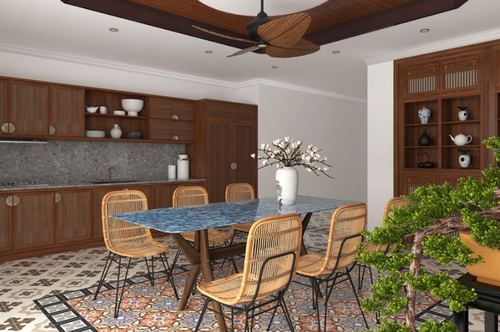
In Vietnam, a patterned tile wall, an arched opening, a pierced lamp and a patterned rug can create accents instead of covering the whole home. Patterned ceramic tiles, cement encaustic tiles and mosaics are available locally and replace handmade zellige, which is costly. An inner courtyard or light well with plants suits the deep townhouse for air and light, but needs solid waterproofing because of heavy rain.